Important dates to remember in April
- April 2 is World Autism Awareness Day
- April 2 is Elem/Middle/Jr Progress Conferences/Teacher Professional Practice Day & High School Professional Development (No classes - all schools)
- April 3 is Good Friday (No classes - all schools)
- April 5 is Easter
- April 6 is Easter Monday (No classes - all schools)
- April 22 is Earth Day
- April 22 is Administrative Professionals Day
- April 19-25 is National Volunteer Week
- April 29 is Elem/Middle/Jr Professional Development & High School Progress Conferences/Teacher Professional Practice Day (No classes - all schools)
April 2 is Autism Awareness Day
Autism Awareness Day is an opportunity to recognize and celebrate the many strengths and experiences of autistic children and youth in our school communities. For families, it’s a moment to reflect on the importance of feeling seen, heard, and supported — not just today, but every day.
In our schools, awareness is only the beginning. True inclusion comes from acceptance, understanding, and a commitment to meeting each student where they are. When educators, students, and families work together to build empathy and reduce barriers, we create environments where every child can thrive.
Recognized globally on April 2, World Autism Awareness Day, led by the United Nations, highlights the importance of improving quality of life and upholding the rights of autistic individuals. This year’s theme, “Autism and Humanity – Every Life Has Value,” reminds us that every person deserves dignity, respect, and the opportunity to thrive, both in school and beyond.
Try Carpool Conversations with your Kids
Looking for an easy way to talk with your child about their digital world? Carpool Conversations from Common Sense Media offers short, engaging prompts and mini podcasts designed to spark family discussions about technology, media use, and online behaviour. Many episodes are only a couple of minutes long, perfect for a car ride or while waiting for practice to start. Explore the conversation starters here.
The “Amazing” Adventure Guide
Unplugged Canada encourages families to reclaim childhood by creating more opportunities for outdoor adventure, independence, and real-world responsibility. Research shows that children thrive when they spend more time exploring their neighbourhoods, solving problems with friends, and contributing meaningfully at home and in their communities. Simple steps like walking to a neighbour’s house, biking to a local park, helping plan a family meal or running small errands help kids build confidence, resilience and practical life skills.
Families can support this shift by intentionally creating space for free, unsupervised play and increasing responsibility over time. That might mean designating “no-adult” play zones, encouraging kids to gather in groups of three or more for creative play, or giving them meaningful household roles such as helping with groceries, cooking or caring for pets.
It can feel challenging to step back, but children build independence by practicing it. Families can make it easier by teaming up with other parents in their neighbourhood to create shared boundaries for safe roaming and outdoor play. For more ideas and practical steps, see the full guide: The “Amazing” Adventure Guide from Unplugged Canada.
Do you know how to raise a concern?
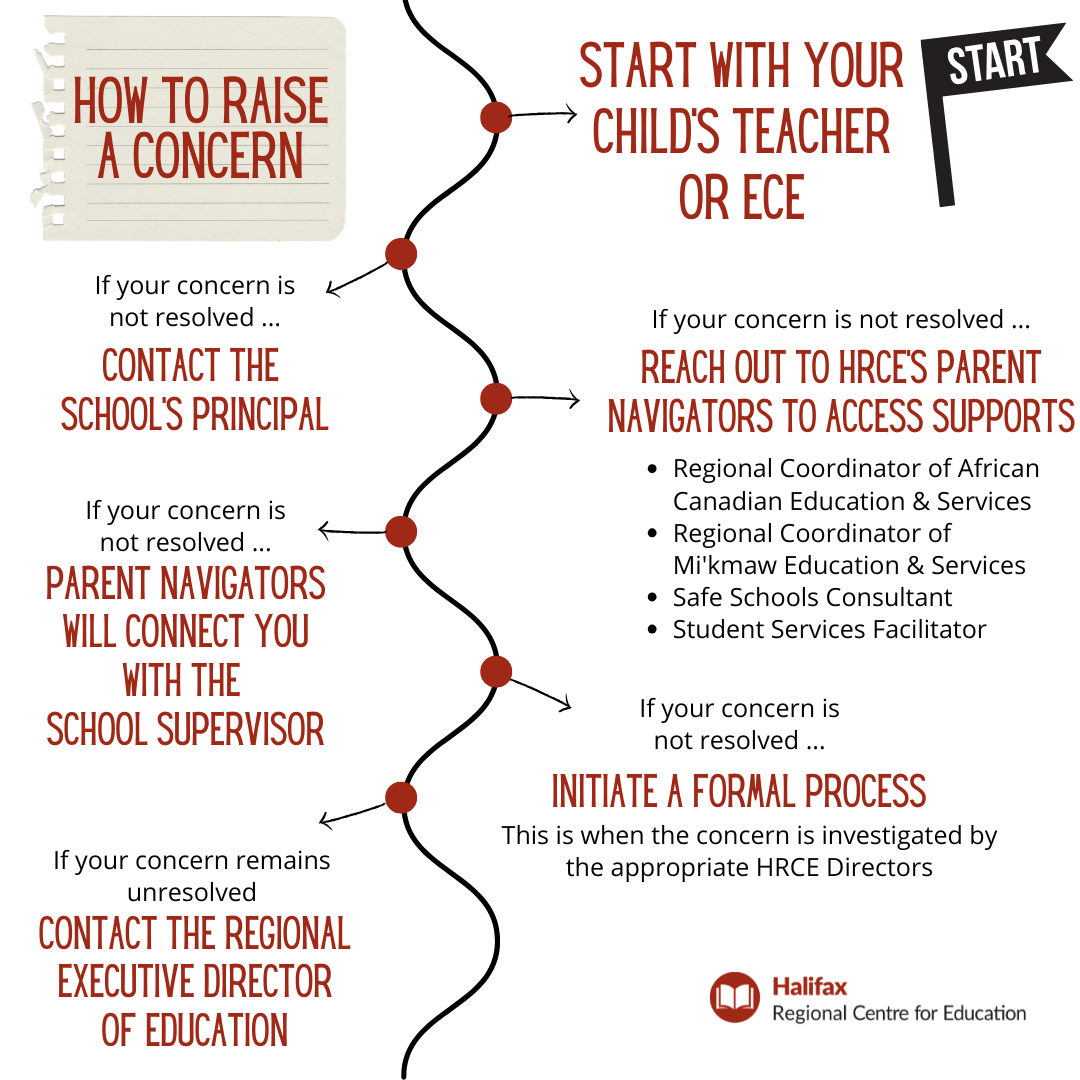
We want families to feel comfortable reaching out when they have questions or concerns about their child’s education or well-being. In most cases, concerns can be resolved quickly by connecting directly with school staff.
If you do have a concern, here are the steps to follow:
- Start by speaking with your child’s teacher or ECE. They are often best positioned to address questions about your child’s learning or classroom experience.
- If the concern isn’t resolved, contact the school principal to continue the conversation and work toward a solution.
- If you need additional support, HRCE’s Family Navigators are here to help. They can provide guidance and connect families with helpful resources and supports. They can be reached at connect@hrce.ca.
- If the concern still isn’t resolved, a formal review process can be requested and the matter will be looked into by the appropriate HRCE Director.
- The final step is for the concern to be reviewed by the Regional Executive Director.
You can learn more about the process here or by reviewing the Parent/Guardian Concern Policy.